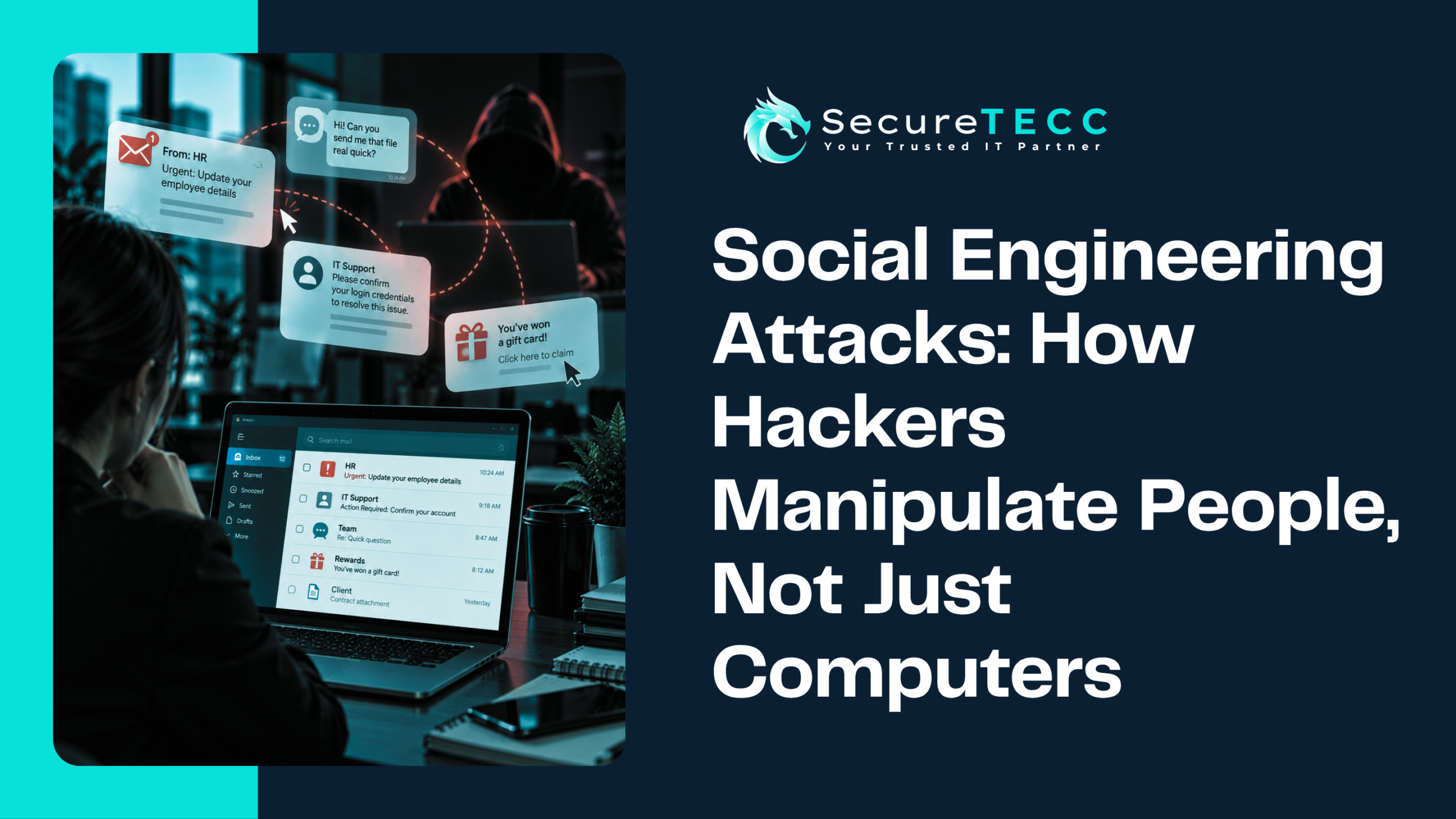
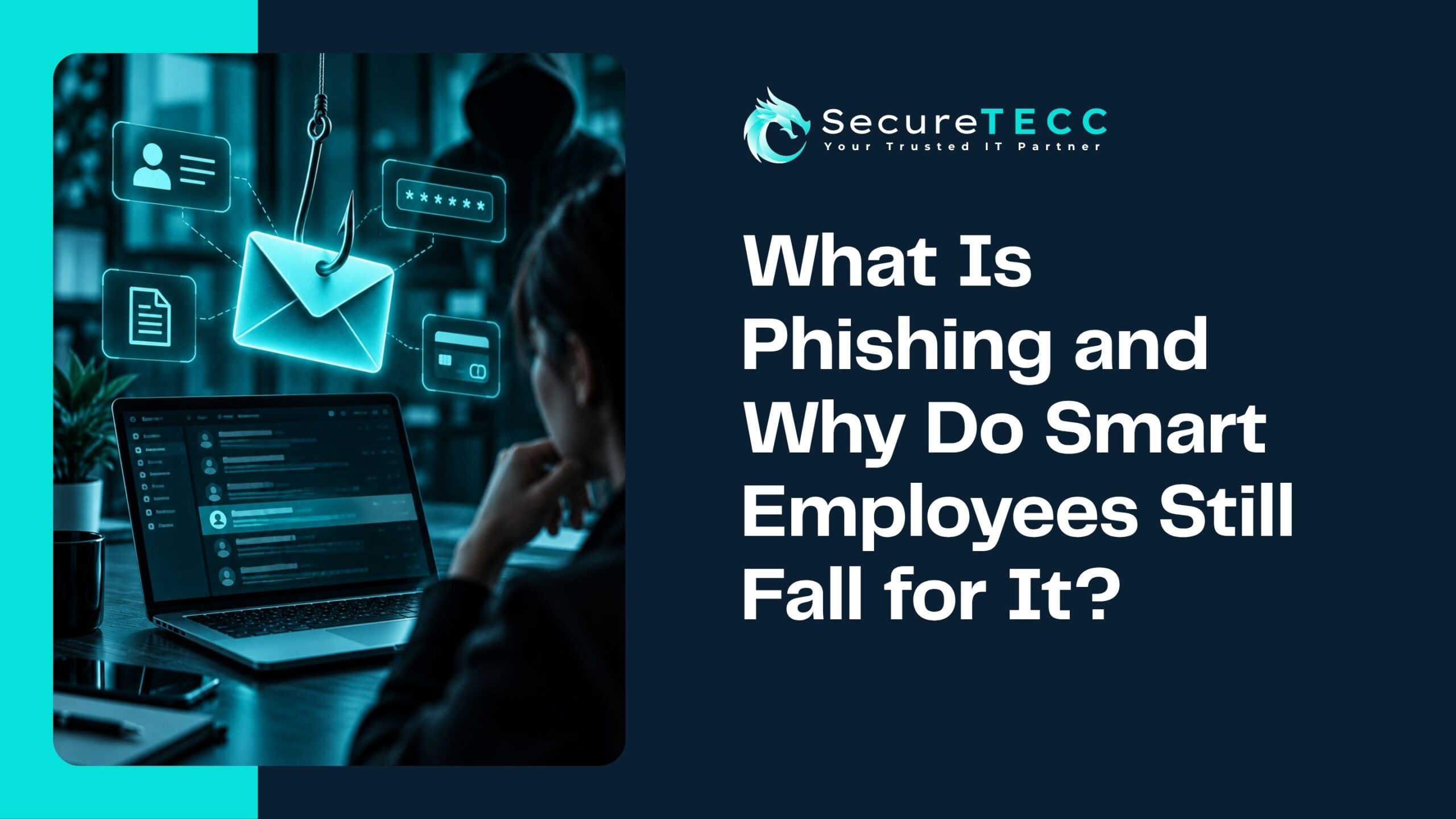
After a phishing incident, there’s almost always a version of the same reaction: “I can’t believe they clicked that — they’re one of our sharpest people.” It’s a natural response, and it’s also based on a misunderstanding of what’s actually happening. Falling for a phishing email has surprisingly little to do with intelligence, and a lot to do with how the human brain is wired to make fast decisions.
Understanding that difference matters, because it changes what actually works to prevent it. A training program built on “just be smarter about it” is fighting the wrong battle. Here’s what phishing actually is, why it works on genuinely capable people, and what actually helps.
Why Do Smart Employees Still Fall for Phishing?
Smart employees fall for phishing because these attacks are specifically designed to trigger fast, automatic decision-making rather than careful analysis — exploiting urgency, authority, and familiar-looking context before the more deliberate, skeptical part of the brain has a chance to engage. It’s not a failure of intelligence; it’s a successful exploitation of how everyone’s brain processes routine-seeming information under time pressure.
What Is Phishing, Exactly?
Phishing is a type of social engineering attack where someone impersonates a trusted person, brand, or institution — usually by email, though increasingly by text message (“smishing”) or phone call (“vishing”) — to trick a target into clicking a malicious link, downloading malware, or handing over sensitive information like login credentials or financial details. The goal is almost never to fool a computer. It’s to fool a person.
Why Doesn’t Intelligence Protect Against This?
Nobel Prize-winning psychologist Daniel Kahneman’s research on decision-making offers a useful way to understand this: people rely on two different modes of thinking. One is fast, automatic, and emotional — the mode used for routine decisions made without much conscious effort. The other is slow, deliberate, and analytical — the mode used when something genuinely demands careful scrutiny.
A well-crafted phishing email is specifically built to be processed by the fast, automatic mode. It looks like something you’d normally act on quickly — a routine invoice, a password reset notice, a message from your actual boss — precisely so the slower, more skeptical mode of thinking never gets engaged. This has nothing to do with how intelligent or careful someone generally is. It has everything to do with whether a specific message is designed to slip past scrutiny in the moment.
What Psychological Triggers Do Phishing Emails Actually Exploit?
Attackers rely on a consistent set of psychological levers, refined because they reliably work:
- Authority — impersonating an executive, IT department, or trusted institution, since people are conditioned to comply with authority quickly, especially under pressure
- Urgency — “your account will be locked,” “payment overdue,” “action required immediately” — designed to trigger action before verification
- Familiarity — mimicking tools and services the target actually uses, so the message doesn’t stand out as unusual
- Curiosity — a subject line or offer designed to make ignoring the message feel like missing out on something
None of these require the target to be careless. They’re designed to work specifically on someone moving quickly through a normal workday — which describes almost everyone, almost all the time.
Does Being Busy or Stressed Actually Make You More Likely to Fall for It?
Research on this consistently points the same direction: workload and cognitive fatigue are meaningfully associated with a higher likelihood of clicking a phishing link. A study analyzing real phishing-simulation click data in hospital settings found that employee workload was one of the few factors directly linked to actual clicking behavior — more so than employees’ stated intentions or attitudes about security. In other words, the moments a business is busiest and most stretched thin are often exactly when phishing risk quietly climbs.
How Big a Factor Is This, Really?
Larger than most business owners assume. Verizon’s 2026 Data Breach Investigations Report found the human element was present in 62% of breaches — up from 60% the year before — and that phone-based social engineering attacks now succeed roughly 40% more often than traditional email phishing, as attackers adapt to a workforce that’s gotten somewhat better at spotting email scams specifically.
Why Doesn’t One Round of Training Fix This?
A single annual training session, or a one-time “here’s what phishing looks like” presentation, tends to produce a short-term bump in awareness that fades quickly — because it’s asking people to remember a rule rather than building an actual habit. Since attackers continuously adjust their tactics (the recent shift toward phone-based social engineering is a clear example), a static, one-time training approach is defending against last year’s version of the problem.
What Actually Helps Reduce This Risk?
Given how phishing actually works, the most effective countermeasures work with human psychology rather than simply asking people to “be more careful”:
- Build in a pause — a simple habit of pausing before acting on anything urgent, financial, or credential-related, regardless of how legitimate it looks
- Verify through a separate channel — confirming unusual requests by phone or a separate message, rather than replying to the message itself
- Ongoing, realistic simulations — ones that reflect current tactics (including phone-based scams), not a single stale training module repeated yearly
- A no-blame reporting culture — employees who fear punishment for reporting a mistake are less likely to flag a suspicious click quickly, which matters enormously for limiting damage
- Multi-factor authentication as a backstop — because even a well-trained team will occasionally get fooled, and MFA is what keeps a single mistake from becoming a full account compromise
What Might This Look Like for a Real Business?
Picture an experienced, detail-oriented office manager — someone who’d normally spot an obvious scam instantly — juggling three deadlines at once when an email arrives that looks exactly like it’s from the company’s actual bank, flagging a “failed transaction” that needs immediate confirmation. In a calmer moment, they might have paused. Mid-crunch, the fast-thinking mode takes over, and the click happens before the slower, skeptical mode ever gets a say. This isn’t a story about carelessness — it’s a story about timing and design, which is exactly why systems and habits matter more than individual vigilance alone.
How SecureTECC Approaches This
SecureTECC’s Cybersecurity services include ongoing employee awareness support alongside technical protections like MFA and real-time threat monitoring — because the most resilient setups treat phishing as a human-and-systems problem, not something a single training video solves on its own.
Frequently Asked Questions
Does phishing awareness training actually work if the psychology is this strong?
Yes, but the kind of training matters — ongoing, realistic simulations that evolve with actual attacker tactics are meaningfully more effective than a single annual session, since they build habits rather than one-time memory of a rule.
Is it fair to blame an employee who clicks a phishing link?
Given how deliberately these attacks are engineered to bypass careful thinking, treating a click purely as an individual failure misses the point — a blame-focused response also discourages the fast reporting that actually limits damage when a mistake happens.
Why are phone-based phishing scams becoming more common?
As employees have gotten somewhat better at recognizing email phishing, attackers have shifted toward phone calls and text messages, which research shows currently succeed at meaningfully higher rates than traditional email attempts.
Can technology alone stop phishing without relying on employee awareness?
No single layer is sufficient on its own — email filtering and threat detection catch a lot, but some messages will always get through, which is why employee awareness and backstops like MFA remain essential alongside technical defenses.
How often should phishing training actually happen?
More frequently than once a year — ongoing, varied simulations that reflect current tactics build lasting habits far better than an annual refresher most people forget within weeks.
The Bottom Line
Falling for a phishing attempt isn’t a character flaw or a sign of carelessness — it’s evidence that an attack was well-designed to exploit exactly how human decision-making works under normal, everyday pressure. Understanding that is what makes it possible to build defenses that actually hold up, instead of just telling people to “be more careful” and hoping it’s enough.
Want a realistic look at how your team would actually handle a modern phishing attempt? Book a free consultation with SecureTECC Solutions — no pressure, no obligation.